
Yeah, well... I'm gonna go build my own branch of humanity, with blackjack and hookers...
Tuesday, January 31, 2023


Sunday, January 29, 2023
esto no se ve para nada amenazador...
para los jovenes, miren este documental sobre el futuro proximo de erasmus jr jr jr
Thursday, January 26, 2023
हिंदुस्तान जिंदाबाद! (et changez la date en terra australis putain!)

on est de nouveau a cette date
ouaip
le jour de la republique indienne!
vive la republique!
on espere que un jour mon pays aura le meme courage
et aussi ici on peut celebrer
une fete similair
(mas a une date differente!)
भारतीय गणतंत्र अमर रहे!
(neuf autres alphabets sont également applicables)

Tuesday, January 24, 2023
zei tu tedesca? o la stranezza dei nomi diversi per i tedeschi nelle lingue europee
nemets
german
deutsch
aleman
tedesco
niemiecki
was zum teufel?
Friday, January 20, 2023
stereo gringotypes - their geography knowledge is shitful

cnn leads the way

but cnnnn really takes the biskwit

Wednesday, January 18, 2023
mier...coles!
(ah bueno, mirafuckinglo en yutub entonces...)
si tienes justo un poquito de miedo a volar... ponte los pañales!
credito a ese pobre (ex) güey
Sunday, January 15, 2023
PARENTI SERPENTI - che colpone di scena!
ciao e grazie per tutto cari genitori...
io non l'ho previsto per niente!
Friday, January 13, 2023
vale terry (sans towelling)
barmy army trumpeter playing ghost town in karachi pakistania shortly after terrys departure
generally i think the barmy army are pretty lame
usually doing the same old shit over and over again
eg shouting barmy army! repeatedly for hours on end
as they get lobsterised by the brutal southern sun
but they do have moments of that bri£ish comedic genius
or in the above case, of poignancy
(without the stabby, stabby obvs)
late to the party as always
i only got into the specials decades late
that's what two tone meant?
last memorably heard in the foothills of the himAlayas
out of time and place but never inappropriate
fanx for the choons
Wednesday, January 11, 2023


Monday, January 09, 2023
slainte! nó b'fhéidir nach bhfuil...
a miniature donkey
some bleak but pretty scenery
explosions in the distance
a nice bloke that bangs on too much
a cranky artistic bloke that doesnt like being banged on at
a line drawn
heedless
the nice bloke bangs on
a finger cut off and flung at a door
a feisty sister
heedless
the nice bloke bangs on again
four more digits cut off and flung at door
a dead miniature donkey
feisty sister does one
nice banging on bloke loses his shit
burns down cranky artistic blokes house
explosions in the distance die down
a metaphor?
formerly nice banging on bloke
isnt nice any more
becomes menacing bloke that bangs on
impending doom abounds ...
ó cac!
Wednesday, January 04, 2023

Monday, January 02, 2023
racism is fucking stupid no. 46663 : curious yellow
How did Asians go from being called “white” to “yellow”
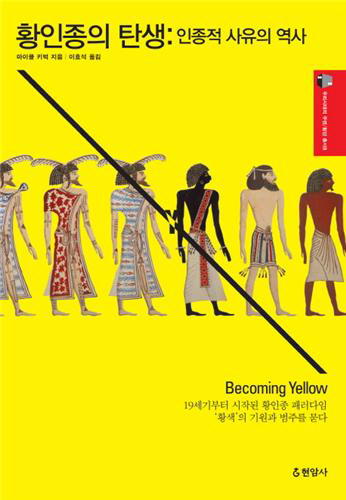
In “The Travels of Marco Polo,” the people of China are described as “white.” Records left by eighteenth century missionaries also report the skin color of Japanese and other East Asian people as clearly white. Yet in the nineteenth century, this perception quietly gave way to descriptions as “yellow.” In travel books, scientific discourse, and works of art, portrayals of East Asians began presenting them as having yellow skin.What happened in between?
In his 2011 book “Becoming Yellow: A Short History of Racial Thinking,” National Taiwan University professor Michael Keevak delves deeply into the origins and history of how and why East Asians went from being seen as “white” to being classified as “yellow.”
The first suspect implicated in applying the “yellow” label to East Asian faces is the famed Carl Linnaeus (1707-78). At first, Linnaeus used the Latin adjective “fuscus,” meaning “dark,” to describe the skin color of Asians. But in the tenth edition of his 1758-9 “Systema Naturae,” he specified it with the term “luridus,” meaning “light yellow” or “pale.”
It was Johann Friedrich Blumenbach (1752-1840) who went beyond the coloring ascribed by Linnaeus to apply the completely different label of “Mongolianness.” Regarded as a founder of comparative anatomy, the German zoologist did more than just use the Latin word “gilvus,” meaning “light yellow,” to describe East Asian skin color: he also implicated the Mongols, a name with troubling and threatening connotations for Europeans with their memories of Attila the Hun, Genghis Khan, and Timur.
While the references remained anomalous at first, travelers to East Asia gradually began describing locals there more and more as “yellow.” By the nineteenth century, Keevak argued, the “yellow race” become a key part of anthropology.
But the yellow label came associated with discrimination, exclusion, and violence. Just as no one in the world is purely white or black, neither does anyone actually have skin that is deep yellow. By “creating” a skin color and investing traits such as “Mongolian eyes,” the Mongolian birthmark, and mongolism (the old name for Down syndrome), Westerners made the perceived yellow race synonymous with abnormality. They also responded to the arrival of immigrants from Asia by sounding the alarm over the “yellow peril” - a term with a whole range of negative associations from overpopulation to heathenism, economic competition, and political and social regression. The hidden agenda of this racial color-coding becomes apparent when one considers who benefits from a hierarchy that places “yellow” and “black” beneath “white.”
stolen from https://english.hani.co.kr/arti/english_edition/e_international/753623.html
Subscribe to:
Posts (Atom)